

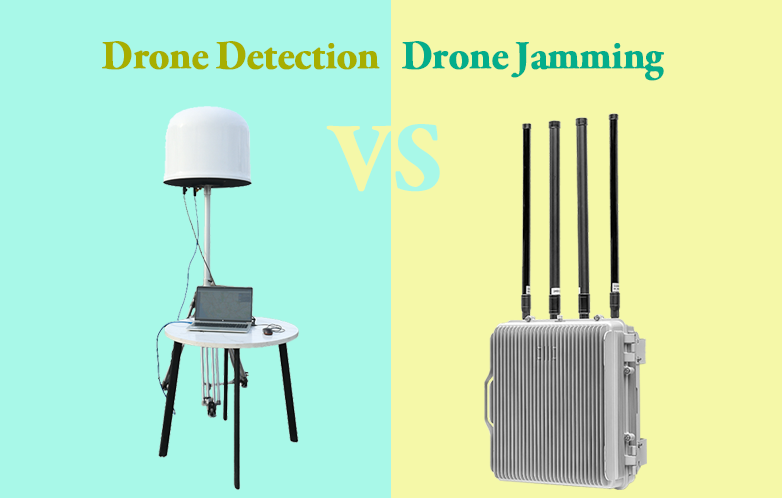



In the rapidly evolving landscape of modern security threats, unauthorized drones—often referred to as Unmanned Aerial Vehicles (UAVs)—have emerged as a critical vulnerability for military installations, critical infrastructure, and high-profile private events. As commercial drones become more sophisticated, affordable, and accessible, the need for robust counter-Unmanned Aerial System (C-UAS) solutions has never been more urgent. Enter the High-Power Drone Jammer Module, a specialized electronic warfare component designed to neutralize threats at significant distances before they can enter restricted airspace.
Understanding High-Power Drone Jammer Technology
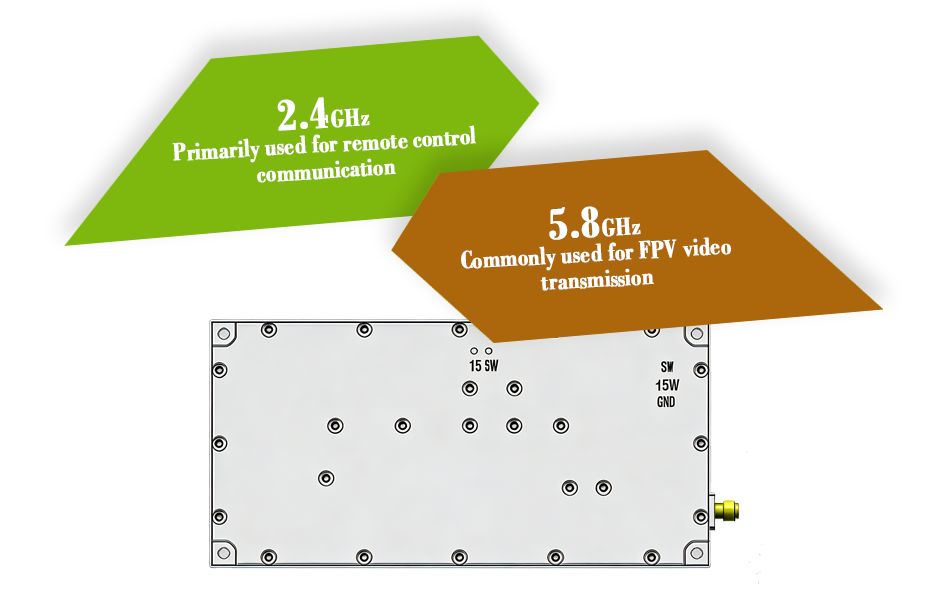
Unlike consumer-grade jammers that offer limited range and efficacy, high-power drone jammer modules are engineered for long-range defense. These systems function by emitting targeted radio frequency (RF) signals that overwhelm the communication links between a drone and its operator. By disrupting the 2.4GHz and 5.8GHz frequency bands commonly used for commercial drone control, as well as Global Navigation Satellite System (GNSS) signals like GPS and GLONASS, these modules force the UAV to either hover in place, initiate a safe landing, or return to its point of origin.
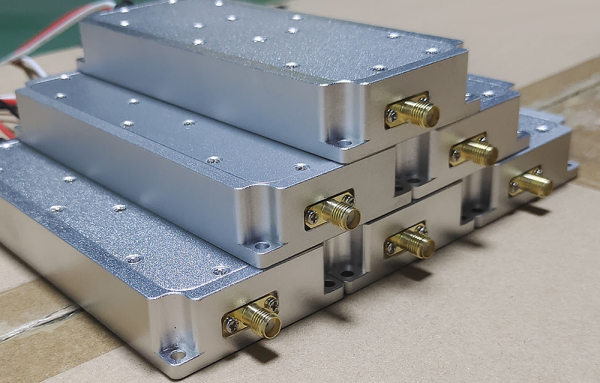
The defining characteristic of a high-power module is its Radio Frequency (RF) output. Measured in watts, higher output translates directly to greater effective range, often extending several kilometers. However, true effectiveness lies not just in power, but in the sophistication of the software-defined radio (SDR) architecture that allows for selective, targeted jamming rather than indiscriminate spectrum denial.
Key Features of Long-Range Defense Modules
When selecting a high-power drone jammer module for strategic defense, security professionals should prioritize the following features:
-
Multi-Band Coverage: Advanced modules cover a wide spectrum, typically from 900MHz to 5.8GHz, ensuring compatibility with various drone models, including custom-built FPV (First Person View) drones that often utilize non-standard frequencies.
-
Directional Antenna Arrays: Long-range defense relies heavily on high-gain directional antennas. These antennas focus the jamming energy into a narrow beam, increasing effective range while minimizing collateral interference with surrounding civilian electronics.
-
Thermal Management Systems: High-power RF components generate significant heat. Industrial-grade modules are integrated with advanced heat sinks, active cooling fans, or liquid cooling systems to ensure sustained operation without performance degradation.
-
Remote and Network Operation: Modern modules support Ethernet, fiber optic, or encrypted wireless control, allowing them to be integrated into larger security networks. This enables operators to manage multiple jamming units from a centralized command center.
Applications in Critical Infrastructure
High-power drone jammer modules are increasingly deployed in scenarios where perimeter security is paramount. Common applications include:
-
Military Bases: Protecting against intelligence, surveillance, and reconnaissance (ISR) threats or weaponized drone attacks.
-
Airports: Preventing drones from entering flight paths, which can cause costly shutdowns and safety hazards.
-
Energy Sector: Safeguarding nuclear power plants, oil refineries, and electrical substations from espionage or sabotage.
-
Prison Facilities: Interdicting contraband delivery drones that attempt to drop illegal materials into correctional facilities.
System Integration and Scalability
One of the primary advantages of using modular components over standalone jammer guns is the ability to integrate them into fixed-site or mobile defense grids. High-power modules can be mounted on pan-tilt units (PTZ) for automated tracking, integrated with radar or radio frequency detection systems, and programmed to engage threats automatically. This creates a layered defense strategy where detection leads to verification, followed by targeted neutralization.
For mobile operations, these modules can be ruggedized for vehicle or naval vessel mounting, providing mobile command units with the ability to establish a temporary no-fly zone during VIP movements or tactical operations.
Compliance and Safety Considerations
While high-power jammers are essential tools for government and defense contractors, it is important to note that their use is heavily regulated. In most jurisdictions, including the United States (FCC) and the European Union (CEPT), the operation of RF jammers is restricted to authorized government entities. Deployment requires strict adherence to local telecommunications laws to ensure that critical communications (such as emergency services) are not inadvertently disrupted.
Modern high-power modules address these concerns by incorporating frequency-specific notch filters and duty cycle controls, allowing operators to disable only the specific frequencies used by hostile drones while preserving cellular and emergency communication bands.
The Future of Long-Range Counter-Drone Defense
As drone technology continues to advance with AI-driven autonomy and swarm capabilities, the demand for more intelligent and powerful jamming solutions will grow. The next generation of high-power drone jammer modules is expected to leverage AI-based signal classification to distinguish between friendly and hostile UAVs, as well as phased array technology for electronic beam steering—eliminating the need for mechanical moving parts and reducing response times to mere milliseconds.
For organizations tasked with securing the skies, investing in scalable, high-power modular systems ensures that defensive capabilities can keep pace with the evolving threat landscape.
