![[Technical Analysis] How Russia Uses Starlink to Extend Attack Drone Range, Leaving Ukraine’s Counter-UAS Systems Struggling](http://szmdjammer.com/wp-content/uploads/2025/07/LOGO-scaled.png)
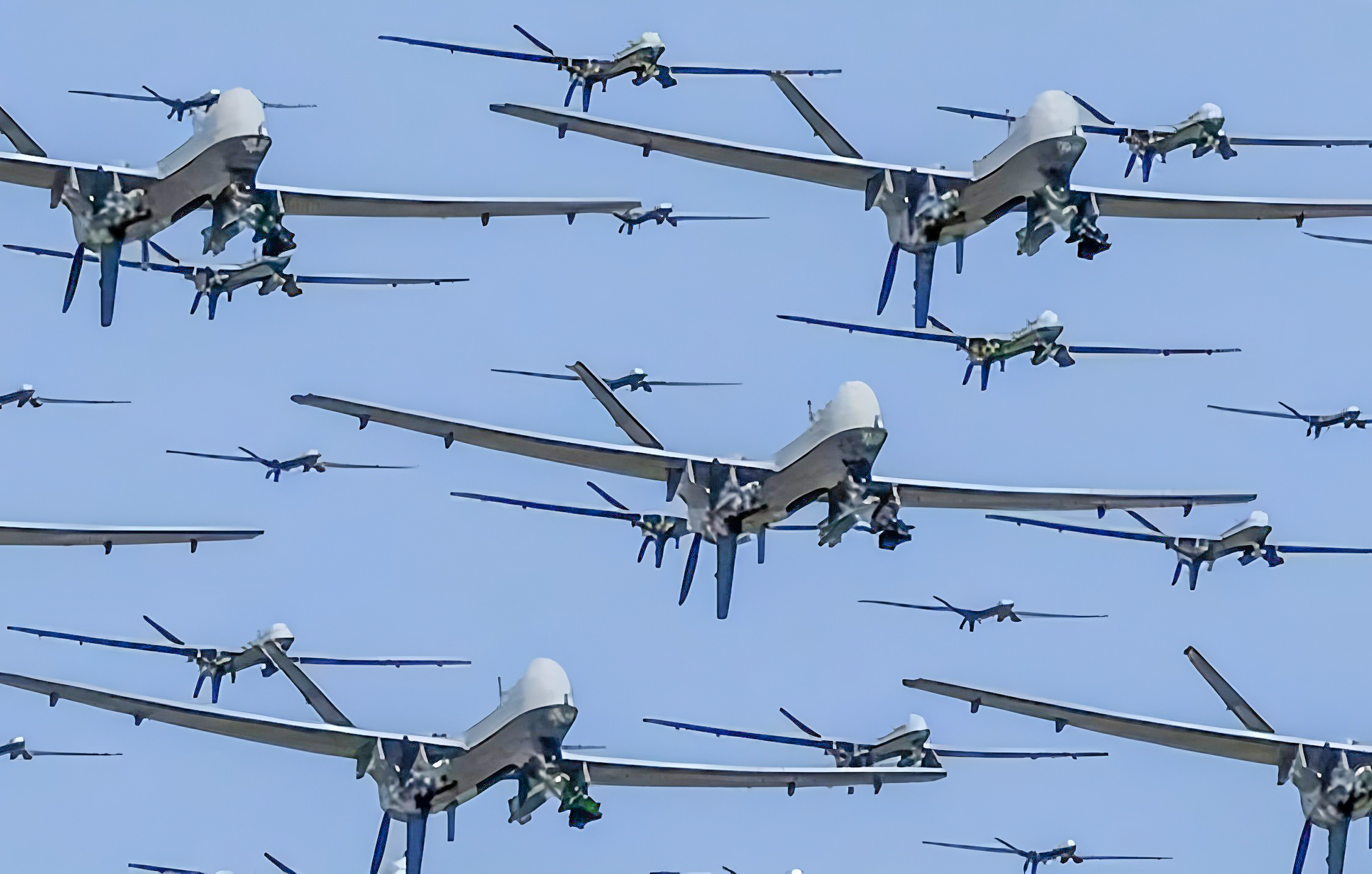


According to a December 29 report by the Russian newspaper Moskovsky Komsomolets, the U.S. bi-monthly magazine The National Interest revealed that the use of Starlink terminals on Russian drones has significantly complicated Ukraine’s counter-drone electronic warfare efforts. Earlier reports indicated that Russia had begun installing Starlink terminals on its drones, and Ukrainian UAVs have since captured images of Russia’s Molniya-2 drone equipped with such a terminal.
01 How Starlink Is Changing the Drone Battlefield
By integrating Starlink terminals, the Russian military can effectively bypass Ukraine’s electronic warfare systems. Ukraine typically disrupts drones by jamming GPS signals and radio frequencies, rendering them inoperable. Unlike radio-controlled drones, Starlink-enabled drones rely on satellite communications, which are far more difficult to interfere with.
Previously, Russian forces used fiber-optic cable-guided drones to avoid Ukrainian jamming. While immune to electronic warfare, these drones were limited by the length of the fiber cable, severely restricting their operational range. In contrast, drones equipped with Starlink terminals can operate hundreds of kilometers away, maintain strong anti-jamming capabilities, and be controlled in real time from within Russian territory.
Although Russia possesses long-range missiles and advanced UAVs capable of striking distant targets, these systems are expensive, easily detectable, and often intercepted by air defense systems. By comparison, entry-level attack drones equipped with compact Starlink satellite communication modules cost between $250 and $500, offering similar strike capabilities at a fraction of the cost. High-tech loitering munitions and cruise missiles, by contrast, can cost tens or even hundreds of thousands of dollars.
Military analyst Besskrestnov released an image of the BM-35 drone, which is equipped with a mini Starlink system and reportedly has a range of up to 500 kilometers (310 miles)—a dramatic enhancement of Russia’s strike capability.
02 Civilian Targets and Precision Strikes
The Molniya drone is an extremely simple and low-cost platform—often constructed from plywood—that would normally have a range of only a few dozen miles. However, once integrated with Starlink, its effectiveness increases substantially. Thanks to satellite connectivity, one out of every three drones successfully reaches its target, according to available assessments.
Electronic warfare measures are largely ineffective against these systems, leaving physical interception as the only countermeasure. As Russia continues to adapt its drone tactics, Ukraine’s counter-UAS systems are increasingly rendered ineffective.
Kyiv has raised concerns over the misuse of Starlink and has pressured SpaceX on the issue. Ukrainian officials confirmed that the Ministry of Defense has contacted SpaceX—the owner and operator of Starlink—to propose measures aimed at preventing Russia from using the system.
03 Ukraine’s Heavy Dependence on Starlink
Since the outbreak of the conflict, Ukraine has become highly dependent on the Starlink network. The system supports military communications, drone operations, government coordination, and civilian infrastructure, including hospitals, schools, and emergency services.
This dependence makes restricting Starlink usage particularly complex, as any limitation risks unintentionally undermining Ukraine’s own war effort and civilian life. The National Interest concludes that if NATO were to weaken Russia’s drone capabilities by suspending Starlink services over Ukraine, the impact on Ukrainian forces could be even more damaging.
Ukrainian Defense Minister Mykhailo Fedorov announced on Telegram that Ukraine is working with SpaceX to address the Starlink issue. However, as of now, SpaceX has not issued a public response.
![[Technical Analysis] How Russia Uses Starlink to Extend Attack Drone Range, Leaving Ukraine’s Counter-UAS Systems Struggling](http://szmdjammer.com/wp-content/uploads/2025/07/ices.jpg)