

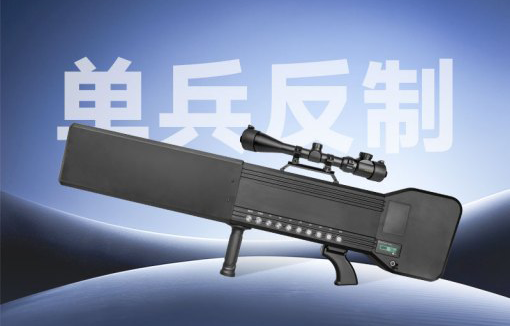
When a rogue drone enters restricted airspace—whether at an airport, a military base, or a critical infrastructure site—security operators face a critical decision. They have the ability to disrupt the drone’s radio frequency (RF) signals, but not all signals are equal. The two primary links are the control link (the command channel from the pilot to the drone) and the video transmission link (the downlink that sends imagery and telemetry back to the operator).
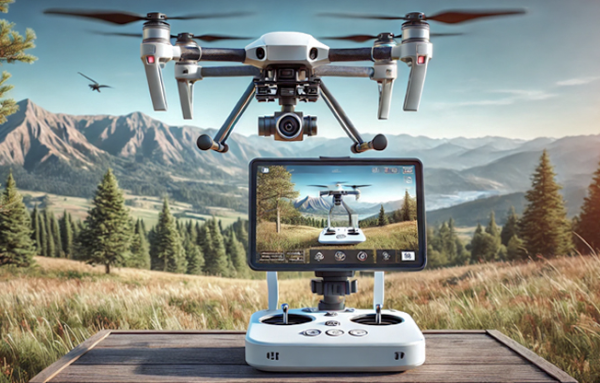
The question is: which one should be jammed? The answer depends on the threat scenario, the drone’s autonomy level, legal constraints, and the desired outcome. Jamming the wrong link can render a counter-drone operation ineffective—or even dangerous.
Understanding the Two Links
Before choosing a jamming target, it’s essential to understand what each link does.
Control Link (Uplink)
The control link carries commands from the remote pilot to the drone. These include throttle, steering, payload activation, and flight mode changes. Most consumer and commercial drones operate on unlicensed ISM bands (2.4 GHz or 5.8 GHz) using protocols like Wi-Fi, FHSS (Frequency-Hopping Spread Spectrum), or proprietary systems.
Disrupting the control link typically forces the drone to execute its pre-programmed “fail-safe” behavior: usually a return-to-home (RTH), auto-landing, or hovering. This is often considered a non-kinetic, relatively safe way to neutralize a threat.
Video Transmission Link (Downlink)
The video link transmits real-time imagery, flight data, and often the drone’s GPS coordinates back to the operator. It usually occupies separate channels or frequency bands (5.8 GHz is common for analog video; 2.4 GHz or 5.8 GHz for digital systems).
Jamming the video feed does not interrupt command and control. The drone remains fully controllable, but the pilot becomes “blind”—unable to see what the drone sees or receive telemetry.
Tactical Considerations: Which Link to Jam?
Scenario 1: The Surveillance Threat
If the drone’s primary mission is espionage, reconnaissance, or invading privacy, the immediate threat is the collection of sensitive imagery. In this case, jamming the video transmission can effectively neutralize the mission. The drone may still be under the pilot’s control, but without visual feedback, the operator cannot gather intelligence or navigate precisely. This approach is often used when the goal is to stop information theft without necessarily forcing the drone to crash or return.
However, a skilled operator may rely on GPS coordinates or fly line-of-sight without video, so jamming video alone is not always a complete solution.
Scenario 2: The Physical Threat
If the drone is carrying a payload (explosive, contraband) or is being flown dangerously toward people or aircraft, the control link becomes the priority. Jamming the control link triggers the fail-safe, which ideally causes the drone to land immediately or return to a safe point. This removes the immediate kinetic threat.
But there is a catch. Some drones are programmed to hover indefinitely when control is lost. A hovering drone with a payload remains a danger. Worse, if the failsafe is set to “continue mission” (rare in consumer drones but possible in customized systems), jamming the control link may have no effect.
Scenario 3: The Autonomous or Semi-Autonomous Drone
Modern drones increasingly feature autonomous capabilities. A drone that is following a pre-programmed waypoint route, or using visual tracking to follow a target, may ignore control link loss. In such cases, jamming the control link does nothing. The operator may also be unconcerned about losing video if the mission is set to “fly to waypoint X and drop.”
For these threats, jamming either link in isolation may be insufficient. Advanced counter-drone systems often combine jamming with spoofing, or target both links simultaneously to ensure neutralization.
Legal and Safety Implications
The choice of which signal to jam also has legal and safety dimensions.
-
Control Link Jamming typically results in the drone attempting to return home. This can be hazardous if the home point is a populated area, as the drone will fly back, potentially over crowds. It can also cause drones to land unexpectedly in sensitive zones or on infrastructure.
-
Video Link Jamming is often considered less intrusive because it does not interfere with the drone’s navigation or flight stability. However, in jurisdictions where jamming any RF signal is illegal (except for government/military), both actions are prohibited without authorization. Civilian counter-drone solutions must often rely on detection and non-jamming mitigation techniques.
Additionally, jamming both links without discrimination can cause interference to nearby legitimate users of the same frequencies, such as Wi-Fi networks or other unmanned aircraft operating in the area.
Technical Feasibility
From a purely technical standpoint, jamming the control link is often easier because control signals typically use lower bandwidth and are more repetitive, making them easier to detect and disrupt. Video downlinks, especially high-definition digital streams, use wider bandwidth and more sophisticated encoding, requiring more power and more precise targeting to jam effectively.
Modern frequency-hopping drones also challenge both strategies. A jammer that only blocks a single fixed frequency may miss the hopping pattern of the control link. In such cases, wideband “barrage” jamming is used, but it risks interfering with all devices across the band.
The Hybrid Approach
The most effective counter-drone solutions today no longer force operators to choose between control or video jamming. Instead, they employ software-defined radios (SDRs) and cognitive electronic warfare techniques that:
-
Analyze the drone’s protocol to determine which links are active.
-
Prioritize jamming based on threat assessment (e.g., first cut video if the drone is hovering near a window; first cut control if it’s approaching a no-fly zone).
-
Use directional antennas to minimize collateral interference.
-
Combine jamming with spoofing to take over the drone safely.
Conclusion
The choice between jamming a drone’s control link or its video transmission is not a simple binary decision. It requires a clear understanding of the drone’s capabilities, the operator’s intent, and the operational environment.
-
Jam the control link when you want to trigger fail-safe behavior and physically remove the drone from the airspace.
-
Jam the video link when you want to stop surveillance while minimizing disruption to flight stability.
-
Do both when facing autonomous threats or when the drone is determined to carry out its mission regardless of connectivity.
As drone autonomy increases and regulations evolve, the future of counter-drone technology will likely move beyond simple jamming to more intelligent, layered defenses that can adapt to the specific signal architecture of each threat.
