
Drone Countermeasure Devices: A Complete Classification Guide
The proliferation of consumer and commercial drones has brought undeniable benefits, but it has also introduced significant security risks. From unauthorized surveillance over sensitive facilities to potential weaponization, the need for effective countermeasures has never been greater. However, not all drone countermeasure devices are created equal. Understanding the classification of these systems is the first step toward building a robust defense strategy.

In this guide, we break down the landscape of Counter-Unmanned Aircraft Systems (C-UAS) into clear categories—based on technology, operational form factor, and functional purpose.
1. Classification by Technology
The most fundamental way to categorize counter-drone devices is by the underlying technology used to detect, neutralize, or disable unauthorized drones.
A. Detection & Tracking Systems
Before any mitigation can occur, the threat must be identified. Detection devices are often the first layer of defense.
-
Radar Systems: Specialized drone detection radars track small, low-altitude, slow-moving targets (often called “low, slow, small” or LSS targets). They provide range, bearing, and altitude data.
-
RF (Radio Frequency) Sensors: These passive sensors scan the spectrum for the control and telemetry signals used by drones. They can often identify the drone’s make, model, and even the pilot’s location.
-
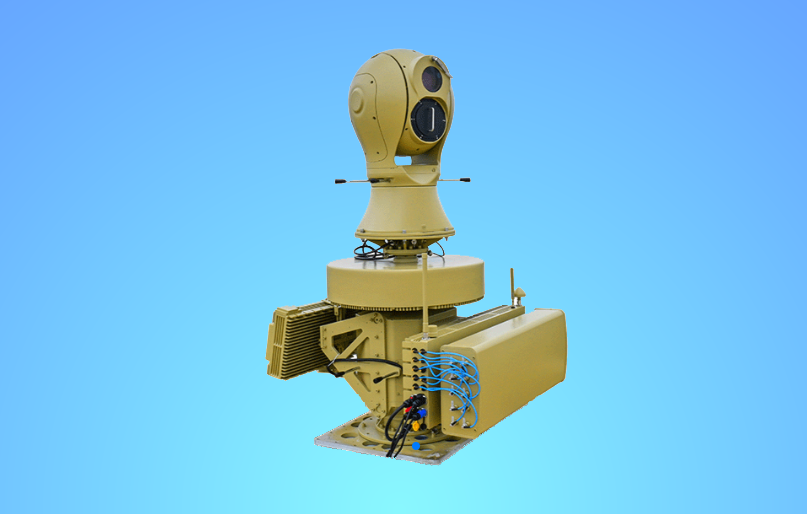
Electro-Optical / Infrared (EO/IR) Cameras: High-definition and thermal cameras provide visual verification and tracking. When integrated with radar or RF sensors, they enable “slew-to-cue” capabilities for positive identification.
-
Acoustic Sensors: Using arrays of microphones, these systems detect drones by their unique sound signatures. They are useful in urban canyons where radar may struggle.
B. Mitigation & Neutralization Systems
Once a threat is detected and identified, countermeasures are deployed. These fall into two main subcategories: non-kinetic and kinetic.
Non-Kinetic Mitigation
These methods disable or neutralize the drone without physical impact.
-
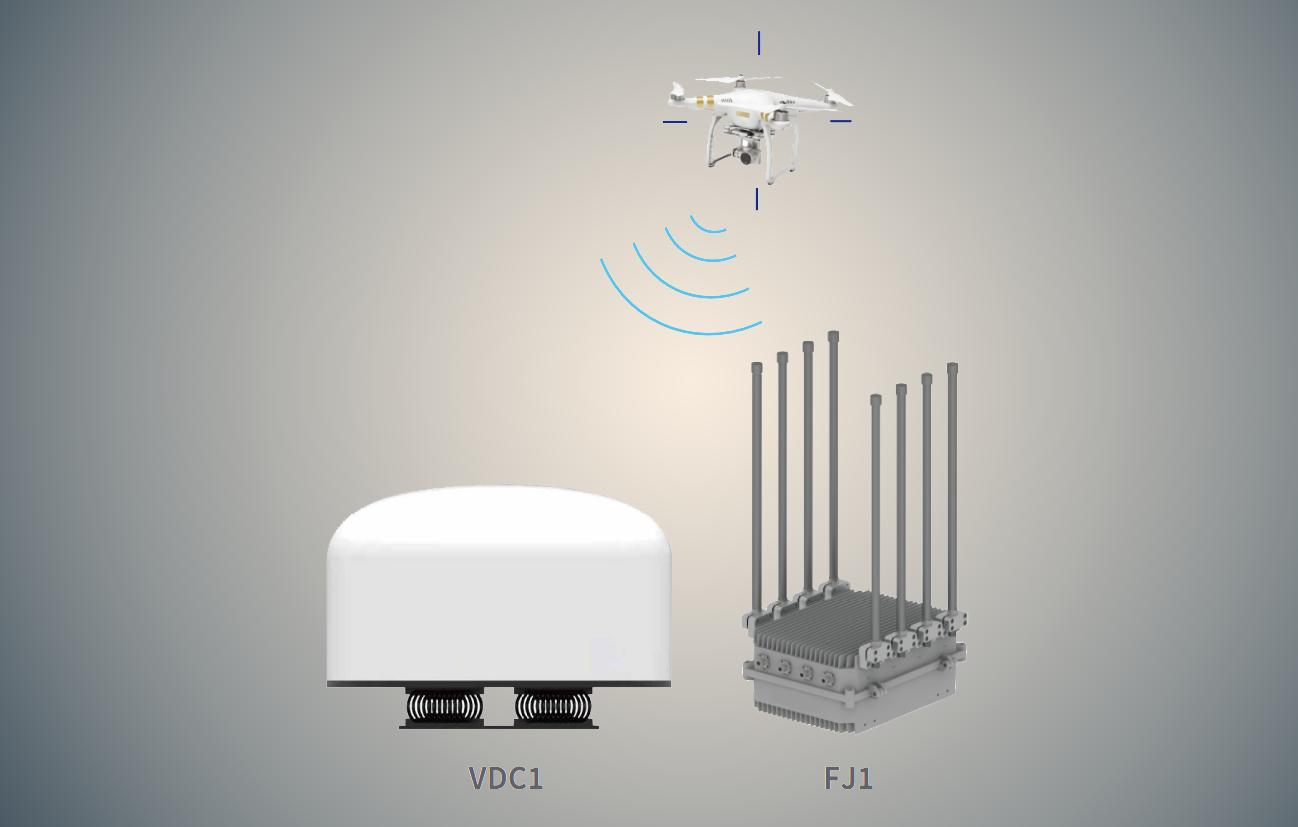
RF Jammers: The most common type. They transmit high-power signals on the drone’s communication bands (e.g., 2.4GHz, 5.8GHz, GPS L1/L2), severing the link between the drone and its pilot. This typically triggers the drone’s fail-safe mode—either landing immediately or returning to its home point.
-
Spoofers: Instead of simply jamming, spoofers emit fake GPS or control signals to deceive the drone’s navigation system. This allows the operator to take control or guide the drone to a safe landing zone.
-
High-Power Microwave (HPM): These systems emit a burst of electromagnetic energy that can fry the drone’s electronic circuitry, causing it to fall from the sky. HPM devices are typically fixed or vehicle-mounted due to their power and size requirements.
Kinetic Mitigation
These methods physically intercept or destroy the drone.
-
Net Guns & Capture Drones: Handheld net guns or larger interceptor drones that deploy nets to entangle the rogue drone’s rotors, allowing for a relatively gentle capture—ideal for forensic evidence collection.
-
Projectile-Based Systems: This includes specialized anti-drone ammunition for shotguns, or small, guided munitions launched from other platforms. Some systems use a grenade-launcher style projectile that deploys a net or a parachute line.
-
Directed Energy Weapons (Lasers): High-energy laser systems can be used to burn through the drone’s structure or disable its sensors at range. These are typically high-cost, high-power solutions used by military forces.
2. Classification by Form Factor & Deployment
The physical configuration of a counter-drone device dictates where and how it can be used.
A. Handheld Devices
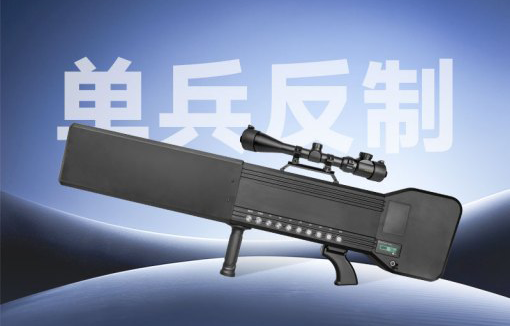
Portable, shoulder-fired or rifle-style jammers are the most recognizable form of counter-drone equipment.
-
Pros: Highly mobile, quick to deploy, ideal for security patrols, VIP protection, and temporary events.
-
Cons: Limited battery life, shorter effective range compared to fixed systems, and require line-of-sight operation.
B. Portable / Manpack Systems
These are backpack-carried units that offer higher power output than handheld devices while retaining mobility.
-
Pros: Extended operational time, often include multiple frequency modules, suitable for military field operations or rapid deployment teams.
-
Cons: Heavier than handheld units; operator fatigue is a consideration.
C. Fixed / Permanent Installations
Mounted on buildings, poles, or towers, these systems are designed for 24/7 perimeter security.
-
Pros: High power output, integration with existing security infrastructure (cameras, alarms), and can be networked to cover large areas.
-
Cons: High installation cost, lack of mobility, and require civil engineering for mounting.
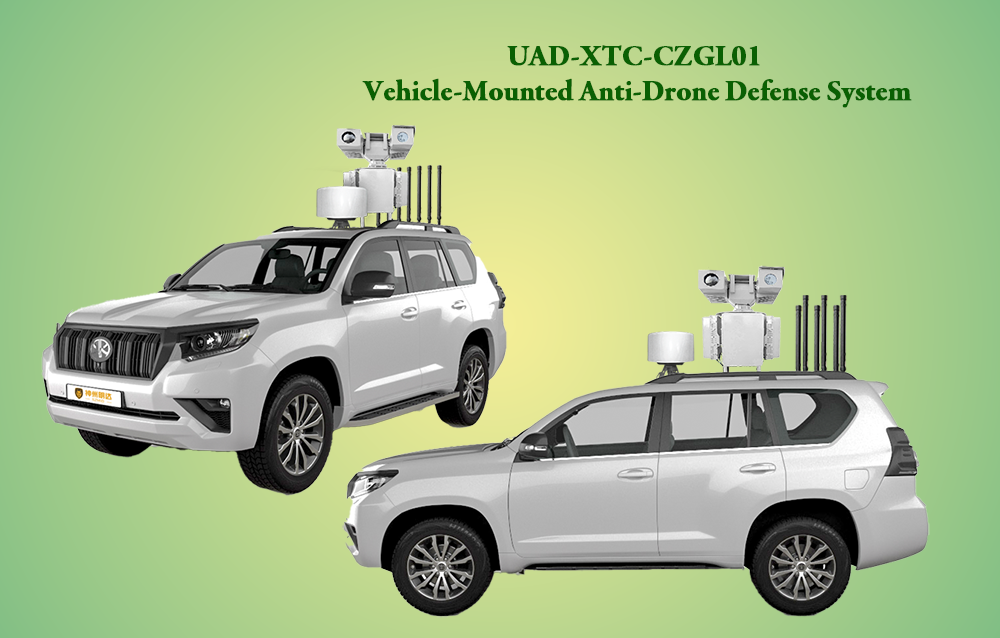
D. Vehicle-Mounted Systems
Integrated onto trucks, armored vehicles, or marine vessels.
-
Pros: Provides power and cooling for high-output jamming or laser systems; offers a mobile, self-contained C-UAS solution.
-
Cons: Higher logistical footprint; not suitable for discreet operations.
3. Classification by Function (Detection + Mitigation)
Modern C-UAS solutions often combine detection and mitigation into a single integrated system. These are generally classified as:
-
Standalone Jammers: Pure mitigation devices. They require an external detection source or a human operator to visually acquire the target.
-
Integrated C-UAS Stations: Complete systems that include radar/RF detection, cameras, and directional jamming antennas in one unit. They can automatically detect, track, and neutralize threats with minimal human intervention.
-
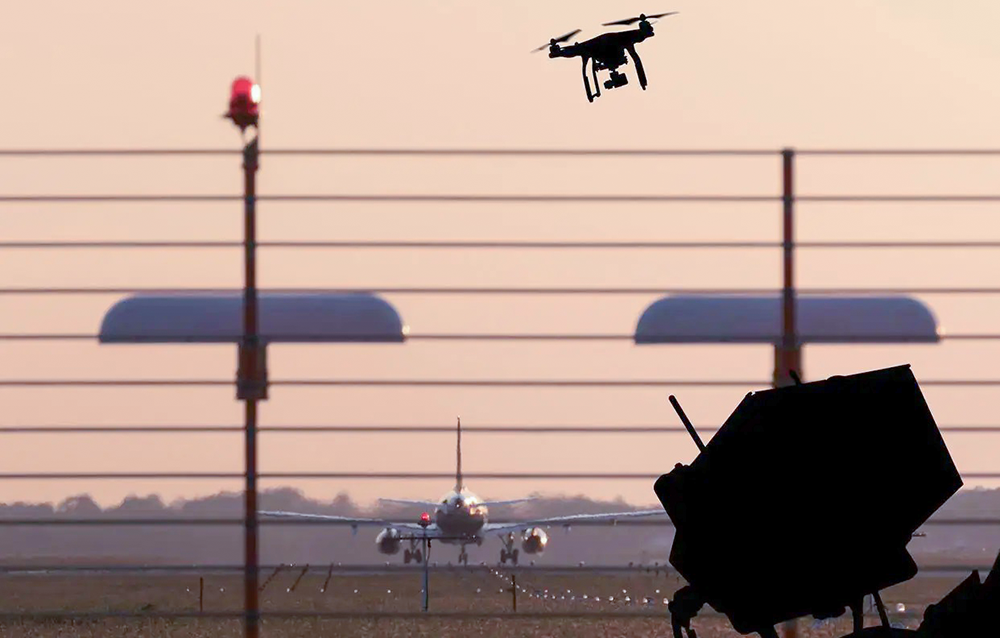
Drone Detection-Only Systems: Used in sensitive areas where jamming may be illegal or undesirable (e.g., near airports), these systems simply provide situational awareness and alerts.
4. Emerging Categories
The counter-drone industry is constantly innovating. Two emerging classifications worth noting:
-
SDR (Software Defined Radio) Based Systems: Unlike traditional fixed-frequency jammers, SDR-based devices can be reprogrammed in the field to adapt to new drone protocols, making them highly future-proof.
-
Autonomous Drone Interceptors: Small drones equipped with AI and nets or other capture mechanisms that autonomously hunt and neutralize rogue drones without a human pilot.
Choosing the Right Class of Device
Selecting the appropriate drone countermeasure device requires a thorough risk assessment. Consider the following:
-
What is the threat level? Are you facing curious hobbyists or sophisticated adversarial drones?
-
What is the operational environment? Is it a crowded urban area where collateral interference is a concern, or an open military installation?
-
What are legal constraints? Jamming and spoofing are heavily regulated in most countries; detection-only systems often face fewer legal hurdles.
-
What is your integration capability? Do you need a simple standalone device, or a system that integrates with existing security management software?
Conclusion
Drone countermeasure devices span a wide spectrum—from simple handheld jammers to fully integrated, AI-driven defense networks. By understanding the classification by technology (detection vs. mitigation, non-kinetic vs. kinetic), form factor (handheld, fixed, vehicle-mounted), and overall function, security professionals can build a layered defense that is both effective and compliant with local regulations.
As drone capabilities evolve, so too must countermeasures. Staying informed about the different classes of C-UAS devices is essential to protecting sensitive airspace in an increasingly unmanned world.
For assistance in selecting or customizing the right class of counter-drone equipment for your specific operational needs, contact our team of C-UAS specialists.
