




Are you looking for a portable, high‑power solution to counter unauthorized drones in the field? The 400W backpack drone jammer has become a popular choice for security teams, law enforcement, and critical infrastructure protection. To help you understand what this device can (and cannot) do, we have compiled the most frequently asked questions from real users. Read on to get clear, practical answers.
Q1: What makes the 400W backpack drone jammer different from handheld jammers?
A: The main differences are power output, battery capacity, and multi‑band coverage. Handheld jammers typically offer 20W–100W total power and run for 40–60 minutes. A 400W backpack unit delivers significantly higher jamming power across more frequency bands (often 6–8 bands), while the backpack form factor allows a larger battery – usually 2–4 hours of continuous operation. It is designed for extended missions where you need to cover a wider area or counter advanced drones with frequency‑hopping capabilities.
Q2: Which frequency bands does this backpack jammer cover?
A: Most 400W backpack models cover the following bands (always check the exact specification of your unit):
-
GPS L1 (1575.42 MHz)
-
GPS L2 (1227.60 MHz)
-
GLONASS / BeiDou (around 1602 MHz)
-
2.4 GHz (drone control & video)
-
5.2 / 5.8 GHz (FPV video, some control links)
-
433 MHz / 868 MHz / 915 MHz (long‑range and industrial drones)
Some advanced versions also include 900 MHz and 1.2 GHz bands. Multi‑band coverage ensures you can disrupt both consumer drones (DJI, Autel) and custom‑built FPV or long‑range models.
Q3: What is the effective jamming range?
A: The effective range depends on environmental conditions, antenna gain, and the drone’s receiver sensitivity. Under open field, line‑of‑sight conditions with the supplied omnidirectional or directional antennas, a 400W backpack jammer typically achieves:
-
GPS bands: up to 1.5 – 2 km
-
2.4 GHz / 5.8 GHz: 800 m – 1.5 km
In urban areas with buildings or heavy foliage, the range may drop to 300 – 700 meters. Using a directional antenna (e.g., a panel antenna) instead of the standard omni can increase range by 30‑50% in a specific direction.
Q4: How long can I use the jammer on a single battery charge?
A: Most 400W backpack units are equipped with a high‑capacity lithium‑ion battery pack (typically 24V / 20Ah – 30Ah). With all bands active at full power, you can expect 2 to 3 hours of continuous operation. Some models offer an energy‑saving mode that lets you turn off unused bands, extending runtime to 4+ hours. The battery is usually rechargeable via an AC adapter or a vehicle DC input, with a full charge taking 3–5 hours.
Q5: Is it heavy? Can one person carry it comfortably?
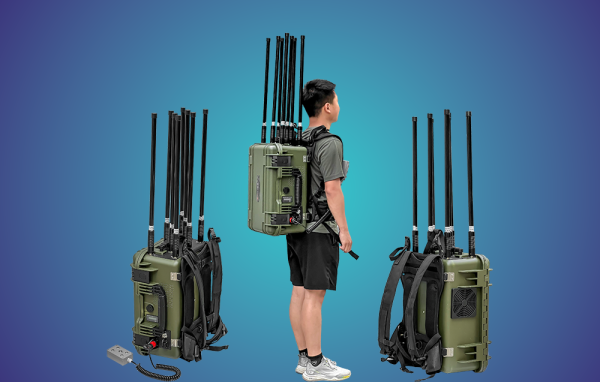
A: The complete backpack system (jammer module + battery + antennas) weighs around 8 to 12 kg (18–26 lbs). While it is heavier than a handheld jammer, the ergonomic backpack harness distributes the weight across your shoulders and hips. Most healthy adults can carry it for 1–2 hours without excessive fatigue. For longer missions, we recommend taking short breaks or using a support vehicle for transport between deployment zones.
Q6: How do I control the jammer? Does it require a separate remote?
A: Typical operation is very straightforward. The backpack includes a small control panel (wired or wireless) that allows you to:
-
Turn individual frequency bands ON/OFF
-
Check battery level
-
Activate a “standby” mode (low power listening, no jamming)
Some advanced models also feature a smartphone app (Bluetooth or Wi‑Fi) for remote control, real‑time spectrum analysis, and logging. Always verify what is included – basic versions use a simple key switch or toggle panel attached to the backpack strap.
Q7: Can I use it while the battery is charging?
A: Generally no, and it is not recommended. The charger is designed for charging only; running the jammer while connected to AC or DC may overheat the charging circuit or cause unstable output. Always operate the unit from its internal battery, then recharge it when not in use. A few high‑end models support “pass‑through” operation, but this is rare for backpack designs.
Q8: What safety precautions should I take when using a 400W jammer?
A: A 400W jammer is a powerful RF transmitter. Follow these essential safety rules:
-
Never point the antenna at people – RF exposure can cause tissue heating. Maintain at least 2 meters distance from bystanders when transmitting.
-
Do not use near medical implants (pacemakers, insulin pumps) – strong RF may interfere with their operation.
-
Avoid flammable environments – the module can become hot; keep it away from fuel, gas, or dust.
-
Respect legal regulations – in most countries, civilian use of jammers is illegal. Only authorized government, military, or law enforcement entities may operate them.
Q9: Can this jammer stop all drones, including those flying autonomously?
A: It disrupts the radio control and video link. For a drone flying autonomously (pre‑programmed GPS waypoints, no real‑time control signal), jamming the control band may have no effect. However, jamming GPS bands will often cause the drone to lose its position reference, triggering a failsafe behaviour – usually landing immediately or hovering until battery depletion. For fully autonomous drones that do not rely on GPS (e.g., indoor visual navigation), a jammer alone may be insufficient; you would need additional countermeasures like net guns or RF spoofing.
Q10: How do I maintain the backpack jammer for long‑term reliability?
A: Simple maintenance ensures a long service life:
-
Keep the ventilation slots clear – overheating is the #1 cause of failure.
-
Recharge the battery every 2–3 months even when not in use, to prevent deep discharge.
-
Store in a dry, cool place – humidity and high temperatures degrade electronics and batteries.
-
Inspect antenna connectors regularly for dirt or damage; a loose connector can damage the amplifier.
Q11: Does the 400W backpack jammer come with a warranty?
A: Most reputable manufacturers (including Shenzhen MDJAMMER) offer a 12‑month warranty on the electronics and a 6‑month warranty on the battery. Some suppliers provide extended warranties or on‑site support for an additional fee. Always request a written warranty document before purchasing.
Q12: What is included in the standard package?
A: A typical 400W backpack drone jammer package includes:
-
Backpack carrying system (with internal jammer module and battery)
-
Set of antennas (usually 6–8 antennas, one per band)
-
Battery charger (AC 110‑240V)
-
DC car charging cable
-
Control panel / remote (wired or wireless)
-
User manual and quick start guide
Optional extras: spare battery, high‑gain directional antenna array, hard carrying case, and remote control via smartphone app.
Final Words
The 400W backpack drone jammer is a serious piece of counter‑UAS equipment designed for professional use. Before purchasing, confirm your legal authority to operate such a device, and always prioritize safety and training. If you have more specific questions about band selection, antenna options, or integration with your existing security system, contact the manufacturer directly with your operational requirements.
