


Why 1.2GHz Is Important in Counter-Drone Systems
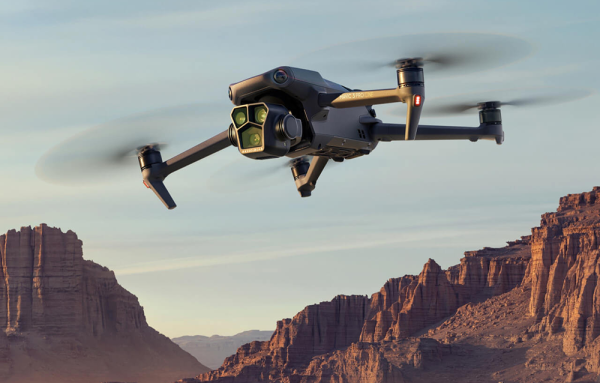
When security professionals discuss drone jamming, the conversation almost always centers on the familiar ISM bands: 2.4 GHz for control and 5.8 GHz for high-definition video. These are the frequencies used by consumer giants like DJI, Autel, and Parrot. However, a growing blind spot in many counter-drone deployments is the 1.2 GHz to 1.3 GHz frequency band. Ignoring this slice of spectrum is a critical vulnerability that sophisticated drone operators—especially those flying custom FPV (First Person View) quadcopters and long-range fixed-wing aircraft—actively exploit.
Understanding why 1.2 GHz matters, and why it demands a dedicated countermeasure strategy, is essential for any comprehensive fixed-site or tactical C-UAS (Counter-Unmanned Aerial System) architecture.
The Physics Advantage: Why Pilots Choose 1.2GHz
The appeal of 1.2 GHz for drone pilots is rooted in basic RF propagation physics. Compared to the higher frequency 2.4 GHz and 5.8 GHz bands, 1.2 GHz signals exhibit significantly longer wavelengths.
This physical property translates into two major tactical advantages for the drone operator:
-
Superior Obstacle Penetration: A 1.2 GHz wave diffracts, or bends, around obstacles like trees, foliage, and even light building materials much more effectively than a 5.8 GHz wave. While a 5.8 GHz FPV feed might break up into static the moment the drone flies behind a single oak tree, a 1.2 GHz video link often remains clear and flyable. This allows pilots to navigate complex, low-altitude terrain that would be impassable on higher bands.
-
Extended Range: Because of lower atmospheric attenuation (free-space path loss), 1.2 GHz signals travel farther with the same power output. For long-range drone enthusiasts and potential adversaries seeking to conduct surveillance from several kilometers away, 1.2 GHz is the gold standard for the video downlink.
The FPV Ecosystem: The Rise of 1.2GHz Video Links
Within the drone hobbyist and custom-build community, 1.2 GHz (often referred to as the 23cm band in amateur radio circles) is not a niche novelty; it is a mature, widely available ecosystem.
Walk into any hobby electronics store or browse online FPV retailers, and you will find a vast array of 1.2 GHz Video Transmitters (VTX) and matched receivers. These components range from low-power 200mW units to high-power 2W or even 4W transmitters capable of delivering analog video feeds beyond 10 kilometers. Because these are analog signals, they degrade gracefully—unlike digital HD systems which drop out completely when signal strength falls below a threshold.
The critical threat vector:
In many unauthorized drone incursions, the pilot uses a dual-frequency strategy:
-
2.4 GHz: Used for the RC control link (or 915 MHz Crossfire/ELRS for long-range control).
-
1.2 GHz: Used exclusively for the analog FPV video feed.
If a security team deploys a standard jammer that only targets 2.4 GHz and 5.8 GHz, the drone’s control link might be severed, triggering a Return-to-Home (RTH) failsafe. However, if the pilot is using a robust 1.2 GHz video link and a separate long-range control system (like 915 MHz), the drone remains fully controllable, and the pilot retains full visual situational awareness. The jammer has essentially done nothing but create a minor, recoverable inconvenience.
The Countermeasure Gap: Why Standard Jammers Fail
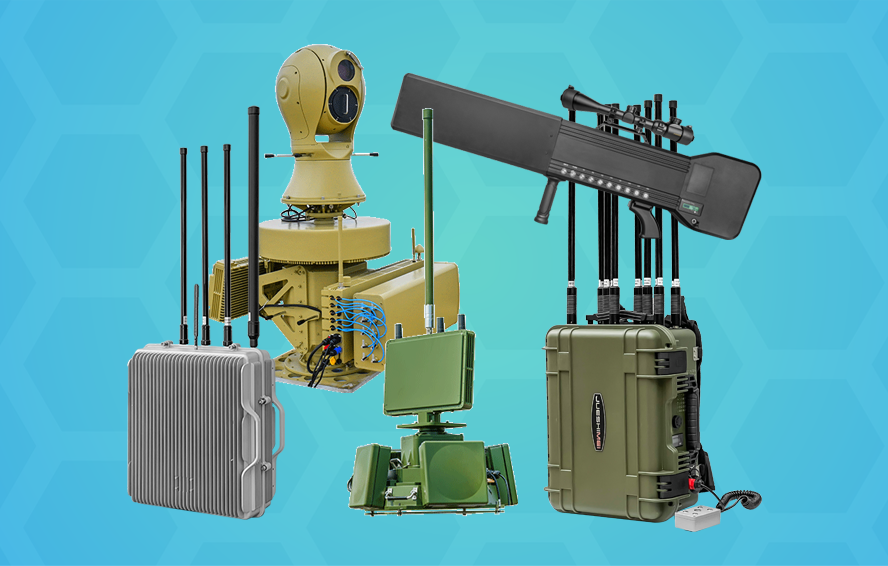
Most commercial off-the-shelf portable jammers and even many basic stationary modules are configured with three standard modules: 1.5 GHz (GPS L1), 2.4 GHz, and 5.8 GHz. They do not include a channel for 1.2 GHz.
There are two reasons for this historical gap:
-
Antenna Size Constraints: A resonant antenna for 1.2 GHz is physically larger than one for 2.4 GHz. Fitting an efficient 1.2 GHz antenna into a slim, rifle-style portable jammer housing is mechanically challenging.
-
Market Focus: Manufacturers have historically prioritized the consumer drone market, which is overwhelmingly 2.4/5.8 GHz centric.
However, as the threat landscape evolves from casual hobbyist flights to more deliberate, reconnaissance-focused incursions, 1.2 GHz jamming capability has transitioned from a “nice-to-have” to a “must-have” for serious security perimeters.
Integrating 1.2GHz Mitigation in Embedded Modules
To effectively counter a 1.2 GHz video link, the counter-drone system must incorporate a dedicated 1.2 GHz RF Power Amplifier Module with the following characteristics:
-
Frequency Coverage: The module should sweep or target the entire 1080 MHz to 1300 MHz range. This covers both legal US amateur bands (1240-1300 MHz) and slightly lower frequencies used in other regions.
-
Power Output: Because 1.2 GHz receivers are often paired with high-gain directional antennas (patch or helical antennas) on the ground, the jammer module needs sufficient power to overcome that front-end gain. A minimum of 20W to 50W is recommended for effective fixed-site denial at ranges exceeding 1 kilometer.
-
Harmonic Filtering: This is non-negotiable. High-power amplification in the 1.2 GHz band can easily produce harmonics that fall directly into the GPS L1 band (1575.42 MHz) . A poorly designed 1.2 GHz jammer can inadvertently jam its own GPS reception or disrupt navigation signals across a wide area. Embedded modules must include robust low-pass or band-pass filters to ensure spectral purity.
The Adjacent Threat: 915 MHz Control Links
No discussion of 1.2 GHz is complete without mentioning its low-frequency counterpart: 915 MHz (US) / 868 MHz (EU) . These bands are the backbone of modern long-range RC control systems like TBS Crossfire and ExpressLRS.
A comprehensive C-UAS strategy recognizes this pairing: 915 MHz for command, 1.2 GHz for vision. An adversary using this combination is operating entirely outside the standard 2.4/5.8 GHz defensive bubble. Therefore, a modern fixed-site jammer array should ideally be a quad-band system: 900 MHz, 1.2 GHz, 2.4 GHz, and 5.8 GHz, in addition to any GPS manipulation modules.
Conclusion: Closing the Low-Frequency Gap
The 1.2 GHz band represents a significant and often underestimated vulnerability in drone defense. It is the frequency of choice for pilots who prioritize range and signal penetration over high-definition digital clarity. For a facility relying solely on 2.4/5.8 GHz jammers, a 1.2 GHz FPV drone is effectively invisible to the electronic countermeasure shield.
As drone technology continues to fragment into specialized, custom-built platforms, counter-drone systems must evolve in lockstep. Integrating dedicated 1.2 GHz embedded jammer modules is not about keeping up with trends; it is about closing a fundamental gap in the radio frequency spectrum that adversaries are actively using to observe and intrude upon protected airspace. For security integrators, the message is clear: check the spec sheet for 1.2 GHz coverage, because your adversary is already using it.
