



RF Amplifier Design for Anti-Drone Applications
With the rapid growth of drone technology, unauthorized or malicious drone activities have become a serious concern for airports, military bases, government facilities, and critical infrastructure. Anti-drone systems rely heavily on electronic countermeasures, and one of the most important components in these systems is the RF power amplifier. Proper RF amplifier design plays a critical role in ensuring effective signal interference and reliable system performance.

The Role of RF Amplifiers in Anti-Drone Systems
In anti-drone applications, RF amplifiers are used to strengthen jamming signals that disrupt communication between the drone and its remote controller or navigation system. These signals typically target common drone communication bands such as 433 MHz, 900 MHz, 2.4 GHz, and 5.8 GHz.
A well-designed RF amplifier increases the power of the interference signal so that it can cover a wider area and effectively block control, telemetry, or video transmission links. Without sufficient amplification, the jamming signal may not reach the drone or may be easily overcome by the drone’s communication system.
Key Design Considerations
Output Power
Output power is one of the most important parameters in RF amplifier design for anti-drone systems. Higher output power allows the system to extend its jamming range and improve effectiveness. However, increasing power also requires better thermal management and power supply design.
Frequency Coverage
Modern drones operate across multiple frequency bands. Therefore, RF amplifiers must be designed either for specific frequency ranges or for broadband operation. Multi-band amplifier modules are commonly used to target several drone communication frequencies simultaneously.
Efficiency and Thermal Management
High-power RF amplifiers generate significant heat during operation. Efficient designs help reduce energy loss and prevent overheating. Heat sinks, cooling fans, and optimized circuit layouts are commonly used to maintain stable performance during continuous operation.
Stability and Reliability
Anti-drone systems are often deployed in demanding environments such as outdoor security zones or mobile defense platforms. RF amplifiers must be designed with high stability and durability to ensure consistent performance over long periods.
Technology Choices in RF Amplifier Design
Several semiconductor technologies are used in RF power amplifiers for counter-drone equipment. Gallium Nitride (GaN) technology has become increasingly popular because it offers higher power density, better efficiency, and improved thermal performance compared with traditional technologies such as LDMOS.
As a result, many modern anti-drone jammer modules use GaN-based RF amplifiers to achieve higher output power in a smaller and lighter form factor.
Integration with Anti-Drone Systems
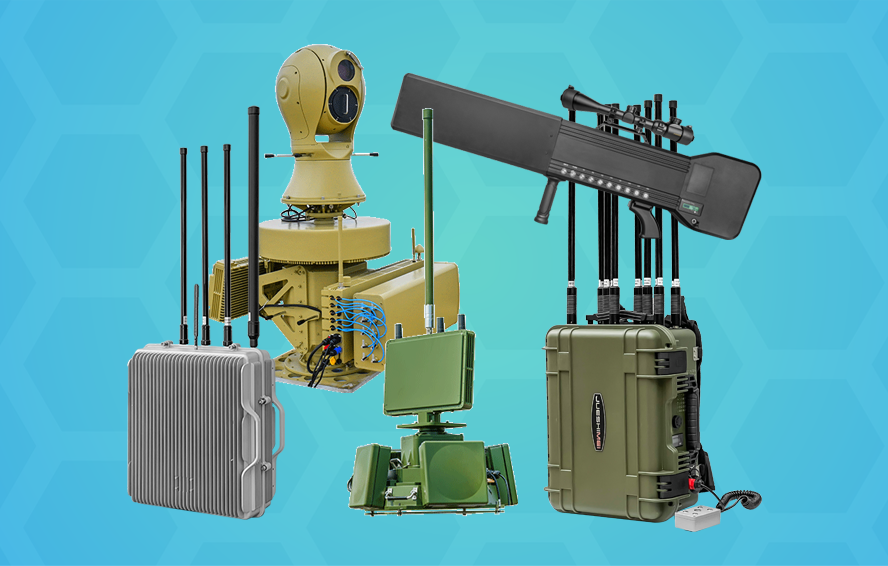
RF amplifiers are typically integrated into larger counter-drone systems that include signal generators, antennas, control modules, and power management units. Proper impedance matching, shielding, and filtering are essential to ensure the amplifier operates efficiently within the system.
System-level design is equally important because the effectiveness of an anti-drone solution depends not only on amplifier power but also on antenna design, deployment strategy, and signal coverage.
Conclusion
RF amplifier design is a critical factor in the performance of anti-drone systems. By focusing on output power, frequency coverage, efficiency, and reliability, engineers can develop amplifiers that significantly enhance the effectiveness of drone countermeasure technologies. As drone threats continue to evolve, advanced RF amplifier solutions will remain essential components in modern airspace protection systems.
