



As drone usage continues to expand across both commercial and recreational sectors, the demand for cost-effective countermeasures has grown rapidly. While high-end anti-drone systems can be expensive, there are now a variety of drone jammer modules available under $500 that offer solid performance for specific applications. This guide will help you understand what to look for and how to choose the best budget-friendly option in 2026.
Why Consider Budget Drone Jammer Modules?
Not every application requires a high-power, military-grade system. Affordable jammer modules are often suitable for:
- Testing and development projects
- Integration into custom counter-UAS systems
- Short-range protection scenarios
- Educational or research purposes
These modules provide essential RF interference capabilities at a fraction of the cost, making them accessible to a wider range of users.
Key Features to Look For
When shopping for drone jammer modules under $500, it’s important to focus on specifications that directly impact performance.
1. Frequency Band Coverage
Most consumer drones operate within common frequency ranges such as:
- 2.4 GHz (remote control signals)
- 5.8 GHz (video transmission)
- GPS bands (1.5 GHz range)
A good budget module should target at least one of these bands effectively. Some models offer single-band specialization, while others provide limited multi-band support.
2. Output Power
In this price range, typical output power ranges from 10W to 50W. While lower than premium systems, this is sufficient for:
- Short-range interference (100–500 meters)
- Controlled environments
- Layered defense setups
Higher wattage generally means better range, but also increased power consumption and heat generation.
3. Signal Stability and Efficiency
Look for modules built with reliable RF components such as LDMOS or GaN technology. Even at lower budgets, stable output and minimal signal distortion are critical for consistent performance.
4. Heat Dissipation Design
Budget modules often operate continuously, which can generate significant heat. Features to consider include:
- Built-in cooling fans
- Aluminum heat sinks
- Thermal protection mechanisms
Proper heat management extends the lifespan of the module and ensures safe operation.
5. Size and Integration Flexibility
Compact and lightweight modules are easier to integrate into portable or fixed systems. Many budget options are designed for:
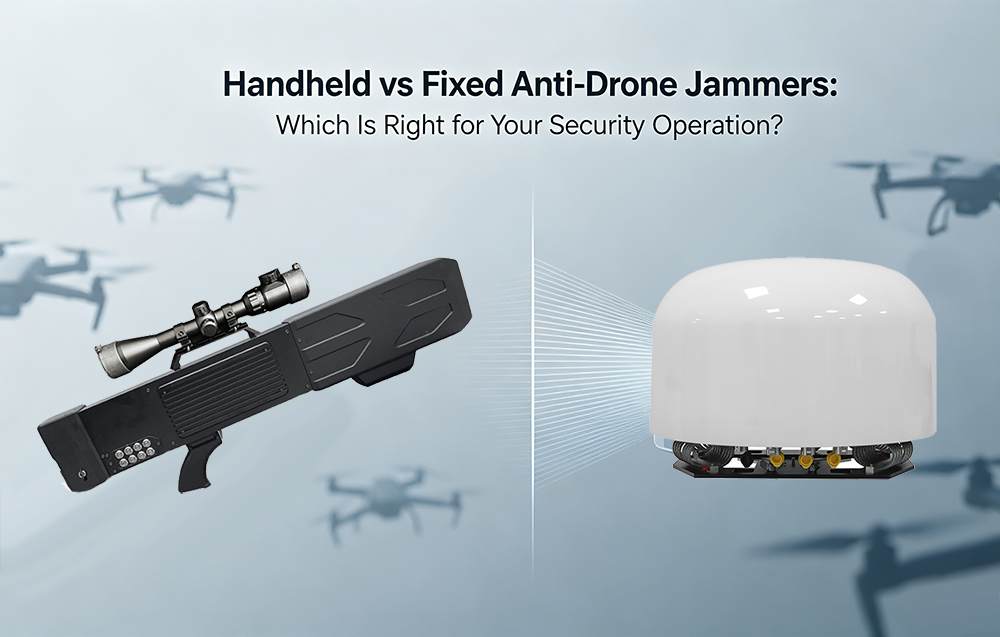
- Handheld jammer devices
- Backpack systems
- Vehicle-mounted setups
Pros and Cons of Sub-$500 Modules
Advantages
- Affordable entry point for anti-drone technology
- Easy integration into DIY or custom systems
- Low power consumption compared to high-end units
- Good for short-range applications
Limitations
- Limited range and coverage
- Fewer frequency bands supported
- Lower durability under heavy use
- Basic functionality without advanced AI or automation
Understanding these trade-offs helps set realistic expectations.
Typical Use Cases
Drone jammer modules under $500 are best suited for:
- Prototype development of counter-UAS systems
- Layered defense setups where multiple modules cover different bands
- Temporary or portable deployments
- Training and simulation environments
They are not typically recommended as standalone solutions for large-scale or high-security environments.
Buying Tips for 2026
1. Prioritize Compatibility
Ensure the module matches your existing system’s voltage, connectors, and antenna requirements.
2. Focus on Specific Needs
Instead of choosing a “multi-purpose” module, select one optimized for the most common drone frequencies in your target environment.
3. Check Manufacturer Reputation
Even in the budget category, build quality varies. Look for suppliers with:
- Clear technical documentation
- Testing data
- Customer support availability
4. Consider Scalability
You may start with one module, but your system could expand. Choose components that can be easily combined with additional modules later.
Future Trends in Budget Jammer Modules
In 2026, even lower-cost jammer modules are benefiting from technological advancements. Emerging trends include:
- Improved energy efficiency
- Smarter frequency targeting
- Compact multi-band designs
- Better thermal management
As production costs decrease, performance continues to improve—making budget modules more capable than ever before.
Conclusion
Drone jammer modules under $500 offer a practical and accessible solution for entry-level counter-UAS applications. While they may not match the capabilities of high-end systems, they provide sufficient performance for short-range protection, testing, and integration projects.
By focusing on key factors such as frequency coverage, power output, and build quality, buyers can make informed decisions and build effective, cost-efficient anti-drone solutions in 2026.
