

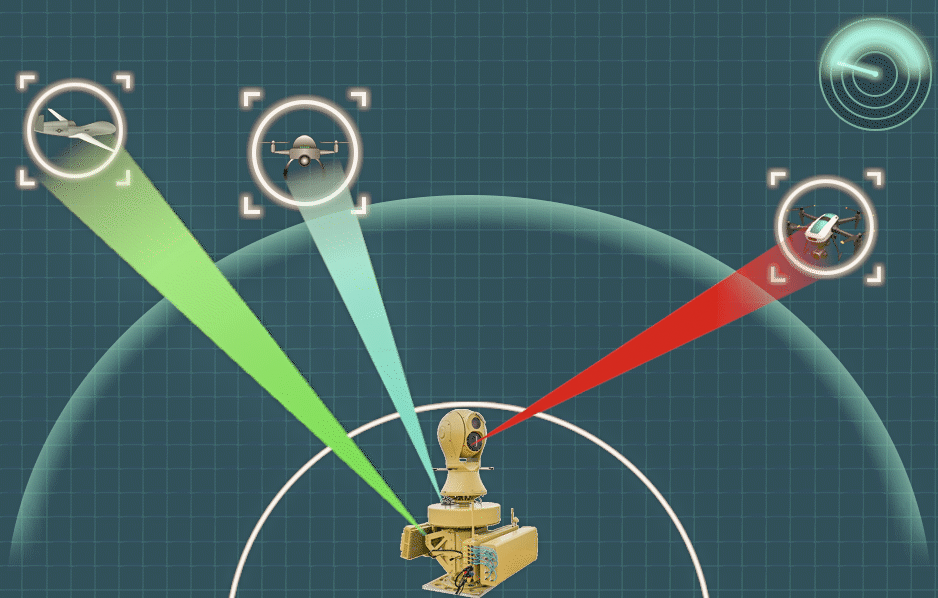

The Myth of Single-Band Drone Defense
In the early days of consumer drones, counter-drone technology seemed simple: just jam 2.4GHz, and the quadcopter falls from the sky. That era is long gone. Modern unmanned aerial systems (UAS) are frequency-agile survivors. They hop between bands, utilize obscure frequencies for command links, and rely on multiple satellite constellations for navigation. A single-band jammer is no longer a defense; it is a liability that creates a false sense of security. To reliably counter rogue drones—from off-the-shelf DJI models to custom-built FPV racing rigs—you need a module capable of continuous coverage from 400MHz to 6GHz.
Why the Spectrum Matters: Mapping the Drone Frequency Landscape
The 400MHz to 6GHz range isn’t just a random slice of spectrum; it’s the comprehensive home of almost every commercial, industrial, and hobbyist drone communication link. Let’s break down exactly what lives in these critical bands and why skipping even one leaves a hole in your perimeter.
400MHz – 470MHz: The Long-Range Legacy Band
Often overlooked by consumer-focused jammers, the 433MHz and 450MHz bands are the workhorses of long-range telemetry and industrial drones. Because of the longer wavelength, a 433MHz signal penetrates foliage and urban clutter far better than 2.4GHz.
-
The Threat: Agricultural spray drones, industrial inspection rigs, and certain military-grade reconnaissance units use this band for command and control (C2) because it offers multi-kilometer range with low power draw.
-
The Gap: If your jammer only covers 2.4/5.8GHz, a drone operating on 433MHz will fly right through your defense envelope without even a glitch in its video feed.
900MHz – 1.2GHz: The FPV Penetration Specialists
This is the realm of serious FPV (First Person View) and BVLOS (Beyond Visual Line of Sight) flying.
-
900MHz (US/International) & 868MHz (EU): Used primarily by the Crossfire and LoRa-based control systems. These links are legendary in the drone community for their ability to maintain control even deep inside concrete parking garages or dense forests.
-
1.2GHz – 1.4GHz: The “old faithful” of analog FPV video. Pilots use 1.2GHz video transmitters specifically because 2.4GHz and 5.8GHz video breaks up the moment you fly behind a single tree. Jamming this band is essential to blinding a pilot who relies on long-range analog video.
1.5GHz – 1.6GHz: The Navigation Sweet Spot (GNSS)
This narrow slice is arguably the most important target in the entire module. It houses the L1 band for GPS (USA), GLONASS (Russia), Galileo (EU), and BeiDou (China).
-
Why It’s Crucial: Drones don’t need a radio link to fly; they need GNSS to hold position and return home. By denying or spoofing the 1.5GHz band, you strip the drone of its spatial awareness. Even if the drone maintains its 2.4GHz video link, without GNSS lock, most consumer drones will either hover drift (awaiting signal) or initiate an emergency landing. Coverage here is non-negotiable for airspace protection.
2.4GHz & 5.8GHz: The Ubiquitous Consumer Backbone
This is where 95% of off-the-shelf drones live. However, the nuance of jamming here is Wi-Fi protocol interference.
-
2.4GHz: Handles both control and video for older drones, and the control link for many modern DJI O2/O3 systems.
-
5.8GHz: Carries the high-bandwidth video downlink.
-
The Hidden Complexity: Modern drones use frequency hopping and channel bonding. A narrowband jammer might only block channel 1, while the drone instantly hops to channel 11 and continues recording. Effective modules in this range must deploy broadband noise across the entire ISM band to ensure the drone cannot find a clean frequency slot.
The Module Design Challenge: Not All Broadband is Equal
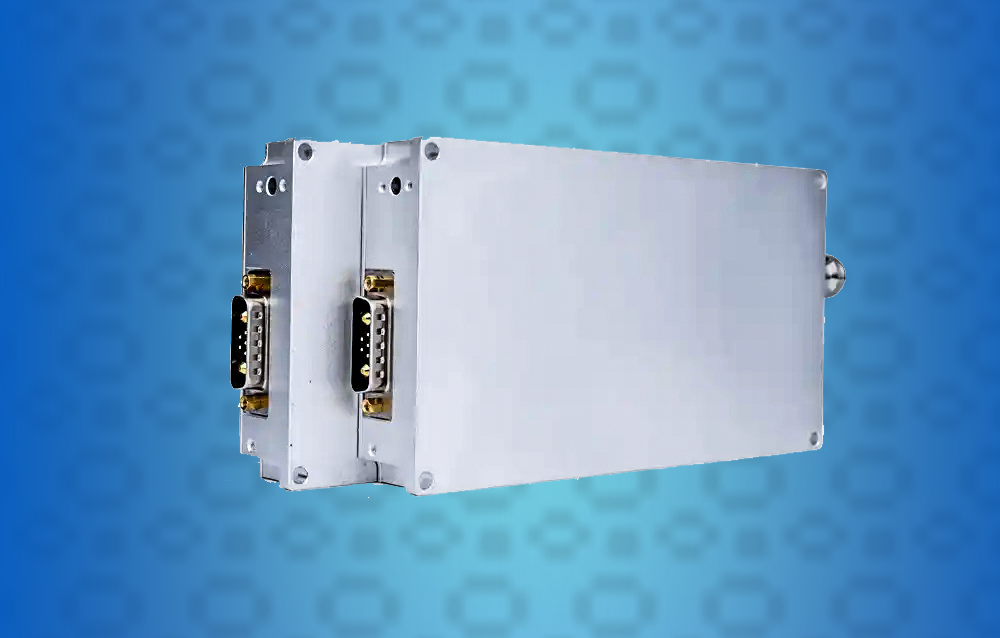
Covering 400MHz to 6GHz is a significant RF engineering challenge. You cannot simply use one antenna and one power amplifier (PA) for that entire 5.6GHz span. Physics doesn’t work that way.
Why Modular Splitting Matters:
A high-performance drone jammer module typically splits the workload into distinct paths:
-
Low-Band Path (400MHz – 1GHz): Handles UHF control, 900MHz telemetry, and the critical 1.2GHz video link.
-
Mid-Band Path (1.5GHz – 1.6GHz): Dedicated, high-efficiency path strictly for GNSS denial.
-
High-Band Path (2.4GHz & 5.8GHz): Broadband amplifiers covering the Wi-Fi/ISM spectrum.
This splitting ensures that the power is distributed efficiently. A single “wideband” amplifier would waste enormous energy on frequencies that drones don’t even use (like FM radio or old analog TV bands), resulting in weak, ineffective jamming range.
Conclusion: The Cost of Narrow Thinking
When evaluating drone countermeasure modules, the specification “400MHz to 6GHz” is more than just a marketing number; it is a statement of tactical versatility. A module that cuts off at 3GHz leaves you blind to 5.8GHz video downlinks. A module that starts at 900MHz ignores the 433MHz command links favored by heavy-lift industrial drones.
In the cat-and-mouse game of airspace security, you cannot defend what you cannot hear or disrupt. Comprehensive, multi-band coverage across the entire 400MHz to 6GHz spectrum ensures that no matter where a drone hides its signal, the jammer module is already there, filling the channel with the one thing a pilot cannot fly through: absolute noise.
